
Walk into a 1930s semi in Eastbourne and you’ll often see the same things: a charming hallway, maybe original floorboards, and behind the walls, wiring that hasn’t been touched for decades. If you’re renovating, buying, or renting out a property, the question of rewiring will almost certainly come up.
It’s not an exciting job like a new kitchen or bathroom, but it’s one of the most important. Faulty or outdated wiring is one of the leading causes of house fires in the UK. It’s also the hidden infrastructure that powers everything from your fridge to your phone charger.
So, how do you know when your home needs a full rewire or whether a smaller fix will do? At M and M Electrical Services Ltd, based in Eastbourne, we’ve been inside hundreds of homes across East Sussex, from HMOs in Seaford to holiday lets in Bexhill, and we’ve seen every scenario.
This post will guide you through the 7 key signs your property may need rewiring, with stories from real projects, practical tips, and clear advice you can act on. By the end, you’ll know what to look for, what to expect, and who to call.
Why rewiring matters more than people think

Electrical wiring is like your home’s circulatory system. When it’s in good shape, everything flows as it should. When it’s not, you get tripping circuits, flickering lights, or worse , silent hazards you can’t see until it’s too late.
We’ve worked with landlords whose tenants had been living with faulty sockets for months, and families who bought their “dream” home only to find it needed a complete rewire before they could move in. The common thread is that most people don’t think about wiring until something goes wrong.
That’s why understanding the signs is so important. A rewire is a big investment, but it brings peace of mind, future-proofs your property, and keeps you compliant with today’s regulations.
Sign 1: Your home has outdated fuse boxes or consumer units
One of the clearest indicators that a property needs rewiring is the fuse board.
Older fuse boxes often have:
- Ceramic fuses instead of modern breakers.
- No RCD protection (which cuts power instantly in a fault).
- Signs of overheating or melted plastic.
A few years ago, we worked on a terraced house in Polegate where the owners had just moved in. Their fuse box was from the 1970s and lacked RCDs. They were shocked when we explained that, in the event of a fault, their system wouldn’t cut power fast enough to prevent harm. A full property rewire and new consumer unit gave them the protection they needed.
If your consumer unit looks old, chances are your wiring is too. Modern units are metal-clad, labelled clearly, and include RCDs and MCBs for each circuit.
Sign 2: Frequent tripping or blown fuses
If your electrics trip often, it’s not just an annoyance; it’s a symptom.
We had a landlord in Eastbourne call us because their HMO property’s electrics were constantly cutting out, frustrating tenants. The issue wasn’t faulty appliances but overloaded, outdated circuits. The property needed a complete rewire to bring it up to standard.
Frequent tripping can signal wiring that’s unable to cope with modern power demands. Today’s homes use far more electricity, TVs in every room, chargers, tumble dryers, induction hobs. Wiring installed 40 years ago simply wasn’t designed for this.
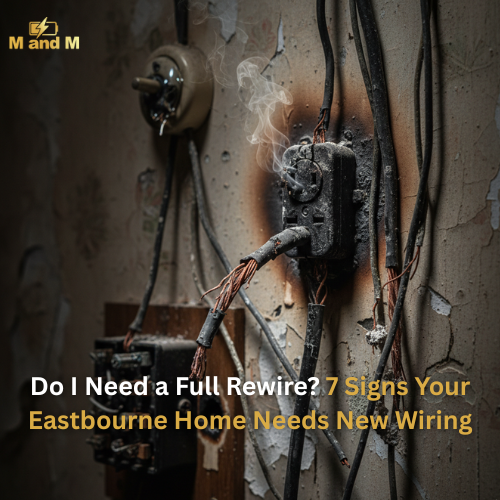
Sign 3: Visible signs of wear, cracked sockets, scorched switches
Sometimes, the signs are right in front of you.
- Sockets with scorch marks.
- Switches that crackle when you use them.
- Frayed or exposed wiring.
In one Eastbourne renovation, we discovered that a family had been using scorched sockets for years without realising the danger. Heat marks around outlets usually mean the wiring behind them is struggling or damaged.
These aren’t cosmetic issues. They’re red flags for potential electrical fires. If you see them, call an electrician immediately.
Sign 4: Old or inadequate wiring materials

Many older East Sussex homes still have rubber, lead, or cloth-insulated wiring. These degrade over time and are no longer safe.
During a rewire in a Seaford HMO, we found perished rubber cables crumbling inside the walls. The landlord was relieved we caught it before it caused a major problem. Modern PVC-insulated wiring is far safer and designed to last decades.
If your home hasn’t been inspected in years, you won’t know what’s behind your walls. That’s why periodic electrical inspections are vital.
Sign 5: You’re renovating or extending
If you’re planning a new kitchen, loft conversion, or extension, your existing wiring may not cope.
We often meet homeowners excited about their new renovation, only to realise their old circuits can’t handle the load. Rewiring at the renovation stage is far less disruptive than waiting until after the plastering and decorating are done.
For example, in a Bexhill-on-Sea project, a couple renovating a Victorian townhouse needed not only a full rewire but also new circuits for modern appliances. Because we caught it early, they saved both time and money.
Sign 6: Lack of sockets and reliance on extension leads
If every room in your house has daisy-chained extension leads, your home probably wasn’t wired for modern living.
In Eastbourne, we rewired a 1930s house where the family had been relying on one socket per room. After the rewire, they had multiple outlets in each space, neatly positioned for everyday use.
Over-reliance on extension leads is more than inconvenient; it increases fire risks and puts pressure on old circuits.
Sign 7: Your home hasn’t been inspected in decades
The last and perhaps simplest sign is age. If your wiring hasn’t been tested in 25–30 years, it’s time to check.
Landlords must have regular EICRs (Electrical Installation Condition Reports), but many homeowners forget. One Eastbourne couple told us they hadn’t had their wiring looked at since the 1980s. Unsurprisingly, their property needed a full house rewire Eastbourne to meet today’s standards.
What a full rewire involves

A full property rewire is a major project, but with the right team, it doesn’t have to be stressful. At M and M Electrical Services, our process looks like this:
- Initial survey and discussion, we walk through your property, listen to your needs, and explain options.
- Detailed quotation, itemised and transparent, so you know exactly what you’re paying for.
- Rewire works; we replace old wiring, sockets, switches, and consumer units.
- Testing and certification, everything is tested to NICEIC standards.
- Finishing touches, decorative sockets, LED lighting, and future-proofing for smart homes.
We’re fully insured, NICEIC-registered, and have a reputation across East Sussex for reliability and quality.
Practical advice if you think you might need a rewire
- Don’t wait for a fault , if in doubt, get an EICR done.
- Plan ahead , rewiring is easiest during renovations.
- Think about future needs , add extra sockets, consider smart tech, and allow for growing energy demands.
- Work with trusted professionals , always choose NICEIC-approved electricians.
For Eastbourne homeowners, landlords, and businesses, you can contact us directly or call 07818 551704 for honest advice and a clear quotation.
Building trust: why experience matters
Our team has handled everything from HMOs in Eastbourne to hotel fire alarm systems in Seaford. We know the local building stock and the common issues that crop up. That experience means we can often spot problems quickly and suggest solutions that save you money long-term.
Follow our updates on Instagram for real project photos, or connect on LinkedIn for insights into our work.
Conclusion
If your Eastbourne property is showing any of the signs listed above , from old fuse boxes to scorched sockets , it’s time to take action. A rewire isn’t just about safety today; it’s about protecting your home, your tenants, or your business for the future.
At M and M Electrical Services Ltd, we believe in honest advice, clear pricing, and safe, high-quality workmanship. Whether you need a full house rewire Eastbourne, an HMO rewire, or an inspection, we’re here to help.
👉 Visit electriciansineastbourne.co.uk to book your survey or follow us on Facebook for updates.