
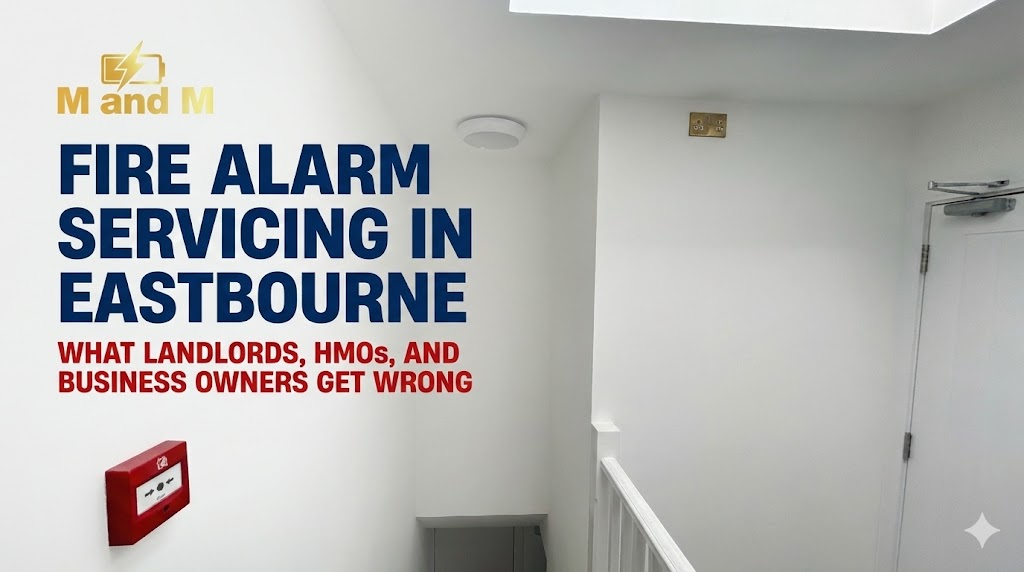
Most people only think about fire alarms when they go off unexpectedly or when an inspection is looming. As fire alarm engineers in Eastbourne, we see this all the time. A landlord rings because a tenant has complained about false alarms. A hotel manager calls after a council inspection raises concerns. A business owner realises their paperwork is out of date and wants it “sorted quickly.”
The common thread is not bad intentions. It is a misunderstanding. Fire alarm servicing is widely misunderstood, often treated as a box-ticking exercise rather than a safety system designed to protect lives, property, and livelihoods.
This article is based on real situations we encounter every week at M and M Electrical Services Ltd. It is written for landlords, HMO owners, and business operators in Eastbourne and the surrounding areas who want clarity rather than jargon. If you are responsible for a building, this is about helping you avoid the mistakes we see most often and showing you what good fire alarm maintenance actually looks like in practice.
Why fire alarm servicing is misunderstood in the first place
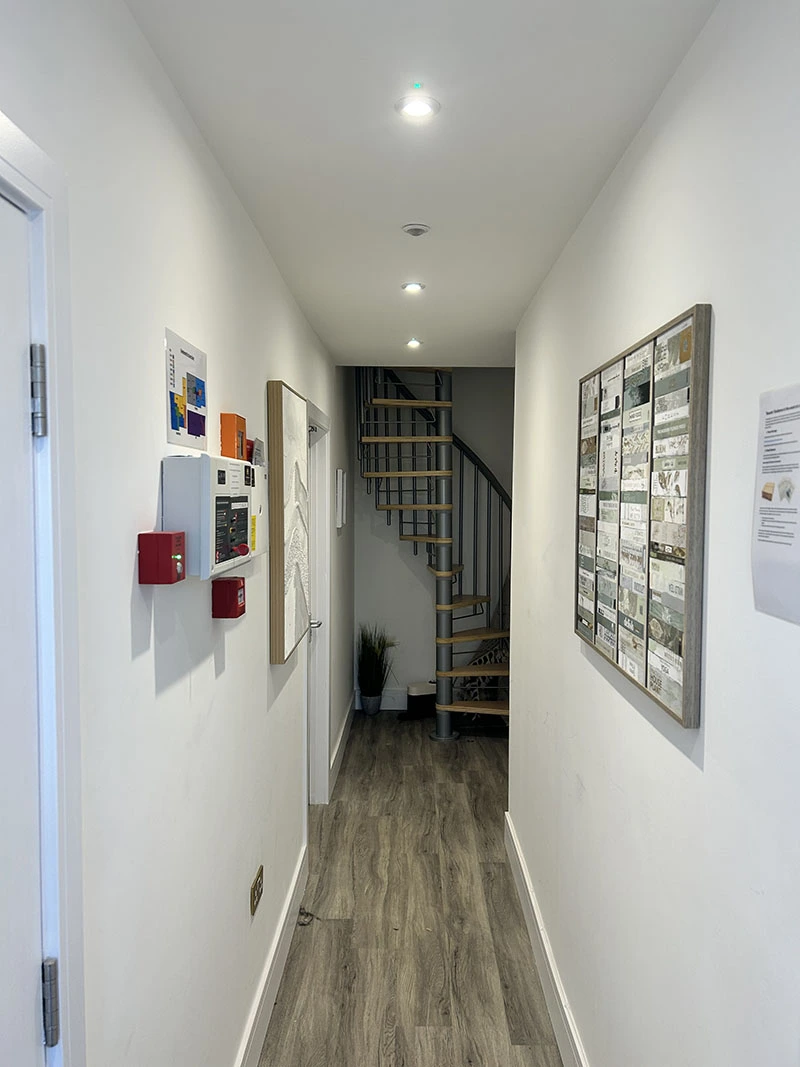
Fire safety law is not light reading. Guidance changes. Responsibilities vary depending on the type of building. Add in busy schedules, managing tenants, staff turnover, and rising costs, and it is easy to see why fire alarm servicing slips into the background.
Another issue is that fire alarms usually sit quietly, doing nothing. When a system works as intended, it is invisible. That can create a false sense of security. Many people assume that because an alarm sounds when tested, the system is fine. In reality, that is only one small part of the picture.
Fire alarm servicing is not just about whether the sounders work. It is about detection, signal integrity, power supplies, fault monitoring, zoning, and compliance with current standards such as BS5839. Missing any of these can mean a system that looks fine but fails when it matters most.
The real cost of getting fire alarm maintenance wrong

When people hear “cost,” they often think only about the price of servicing. What tends to be overlooked is the cost of not doing it properly.
We have attended properties in Eastbourne where poor fire alarm maintenance led to enforcement notices, delayed property sales, invalidated insurance, and serious disputes with tenants. In HMOs, especially, the consequences can escalate quickly. Councils take fire safety seriously, and rightly so.
For businesses, the risks extend beyond fines. A failed fire alarm test during an inspection can result in operational disruption, reputational damage, and in some cases, closure until issues are resolved.
The harsh truth is that cutting corners on fire alarm servicing rarely saves money in the long run. It usually just delays a larger problem.
Mistake one: thinking testing and servicing are the same thing
This is probably the most common misunderstanding we see.
Fire alarm testing is typically a routine check. For example, weekly tests in commercial premises or regular checks in HMOs to ensure sounders activate. These tests are essential, but they are not servicing.
Fire alarm servicing is a more in-depth process carried out by a competent fire alarm engineer. It involves inspecting the system components, checking detectors, examining control panels, verifying power supplies, reviewing fault logs, and ensuring the system still matches the building’s layout and use.
We often arrive at properties where weekly tests have been logged perfectly, but no professional servicing has been done for years. From a compliance and safety point of view, that is a serious gap.
Mistake two: assuming one system fits every building

Not all fire alarm installations are created equal. A single domestic property has very different requirements from an HMO, hotel, or commercial unit.
At M and M Electrical Services Ltd, we design and install systems ranging from Grade D domestic mains-powered alarms with battery backup to full Grade A panel-controlled systems. The right choice depends on the building type, occupancy, risk profile, and legal requirements.
A common mistake is installing or maintaining a system that was suitable years ago but no longer fits the building’s use. Properties change. HMOs expand. Commercial spaces are reconfigured. Detection coverage that once made sense may now leave gaps.
Fire alarm servicing should always include a conversation about whether the system is still appropriate. Skipping that step is how outdated systems linger unnoticed.
Mistake three: relying on the cheapest quote without checking competence
Price matters. We understand that. But when it comes to fire alarm services, the cheapest option is not always the safest one.
Fire alarm engineers should be trained, insured, and working to recognised standards. Our team is qualified to British Fire Protection Systems Association standards, NICEIC-registered, and experienced with a wide range of systems across domestic, commercial, and industrial settings.
We sometimes inherit systems that have been poorly installed or inadequately serviced by contractors who were not properly qualified. The cost to correct those issues often far exceeds the original saving.
Competence is not just about qualifications. It is about experience, judgement, and understanding how systems behave in real buildings with real people using them every day.
Mistake four: ignoring false alarms instead of investigating them
False alarms are one of the biggest sources of frustration for landlords and business owners. They disrupt tenants, annoy neighbours, and can lead to complacency if people stop taking alarms seriously.
What often goes wrong is that false alarms are treated as a nuisance rather than a warning sign. In many cases, repeated false alarms point to underlying issues such as poor detector placement, environmental factors, ageing components, or wiring faults.
Proper fire alarm servicing includes investigating the cause of false alarms, not just resetting the system. Ignoring the root cause increases the risk of a real alarm being ignored when it matters most.
Mistake five: misunderstanding legal responsibilities in HMOs
HMOs come with heightened responsibilities, and fire alarm servicing is a major part of that.
We regularly work with landlords who genuinely believe they are compliant because they have alarms installed and keep a basic log. The reality is that councils expect systems to be appropriate for the property, properly maintained, and regularly serviced by competent fire alarm engineers.
LACORS guidance and BS5839 set clear expectations, particularly around shared areas, detection coverage, and maintenance records. In Eastbourne and across East Sussex, enforcement teams are well informed and thorough.
If you own or manage an HMO, fire alarm servicing is not optional, and it is not something to guess at. It needs to be structured, documented, and carried out professionally.
Mistake six: treating fire alarms as separate from the rest of the electrical system
Fire alarms do not exist in isolation. They are part of a wider electrical environment that includes emergency lighting, general wiring, control panels, and power supplies.
We often find issues during fire alarm servicing that are linked to broader electrical problems. These might include degraded cabling, poor earthing, or outdated consumer units. In older properties, especially, these issues can compromise system reliability.
This is why working with an electrical contractor who understands the bigger picture matters. At M and M Electrical Services Ltd, we carry out everything from inspections and testing to full rewires, which means we can identify risks others might miss.
Related services that often go hand in hand with fire alarm work include:
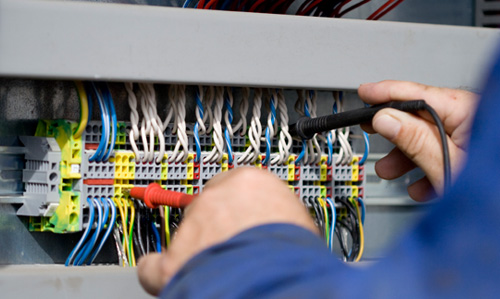
Electrical inspections and testing

Emergency lighting

rewires
What proper fire alarm servicing actually looks like
So what should you expect when fire alarm servicing is done properly?
First, it starts with understanding the building. Who uses it, how it is laid out, and how it has changed over time. Servicing without context is just mechanical checking.
Next comes a structured inspection of the system. This includes detectors, sounders, control equipment, power supplies, and any interfaces with other systems. Fault logs are reviewed, not ignored.
Testing is carried out methodically, with results recorded clearly. Any issues are explained in plain language, along with practical recommendations. There is no scare tactics, just honest advice.
Finally, documentation matters. Clear service records protect you as much as they protect occupants. They demonstrate that you have taken reasonable steps to meet your obligations.
Experience from the field: a familiar Eastbourne scenario
One case stands out. A small HMO in Eastbourne had passed multiple routine checks but was flagged during a council visit. On inspection, we found that the fire alarm installation no longer matched the property layout after internal alterations.
Detectors were missing in key areas, and the system had not been professionally serviced in over three years. The landlord was not negligent. He simply did not realise the implications of the changes.
We redesigned the system, carried out a compliant fire alarm installation, and put a servicing schedule in place. The council issues were resolved, and the landlord now has peace of mind.
This kind of situation is far more common than people realise.
Fire alarm installation and servicing should work together
Many problems we see during servicing trace back to poor installation decisions made years earlier. That is why we approach fire alarm installation and servicing as part of the same lifecycle.
Our installation work complies with BS5839-1-6, LACORS, and the Disability Act where required. We use modern technology to reduce disruption and long-term costs, and we always advise clients on system suitability rather than overselling.
When installation and servicing are aligned, systems last longer, perform better, and cost less to maintain.
Building trust through transparency and local accountability
One reason much of our work comes from referrals is simple. We explain things clearly and do what we say we will do.
Being based in Eastbourne matters. We know the local housing stock, the common issues in older properties, and the expectations of local authorities. We are not a call centre or a faceless national firm. If you call us, you speak to people who work on the systems themselves.
You can see examples of our work and day-to-day projects on Instagram
We also share updates and engage with the local community on Facebook and LinkedIn, where transparency and reputation matter.
Practical steps you can take right now

If you are responsible for a property in Eastbourne, here are a few sensible steps you can take today:
Check when your fire alarm system was last professionally serviced, not just tested.
Review whether the system still suits the building’s current use.
Make sure service records are complete and accessible.
If you manage an HMO or business, confirm that your contractor is properly qualified and insured.
Address false alarms promptly instead of tolerating them.
None of these steps require specialist knowledge, just attention and follow-through.
Final thoughts from the trade
Fire alarm servicing is not about ticking boxes or satisfying inspectors. It is about ensuring that, if the worst happens, people have time to get out safely.
Landlords, HMO managers, and business owners who get this right tend to sleep better at night. Not because they fear penalties, but because they understand their responsibilities and have taken them seriously.
Or speak directly with Max May or Aaron Satchwell at M and M Electrical Services Ltd. We are always happy to have an honest conversation, even if it just helps you understand where you stand.