

Your home might have a modern kitchen, new lighting and the latest appliances, but what about the electrical equipment keeping everything running behind the scenes?
It’s easy to overlook the fuse board. Usually tucked away in a cupboard, hallway or utility room, it’s something most people rarely think about until the power goes off.
Yet as properties change and electrical demands increase, an older fuse board may no longer provide the level of protection expected from a modern electrical installation.
Fuse board upgrades can improve electrical safety, provide more appropriate circuit protection and help prepare a property for future electrical improvements.
For homeowners, landlords and businesses across Eastbourne and East Sussex, understanding when a fuse board needs attention can help prevent electrical problems and avoid unnecessary expense.
What Are Fuse Board Upgrades and Why Do They Matter?
A fuse board, commonly called a consumer unit, is the central distribution point for electricity within a property.
It distributes electricity to different circuits, including lighting, sockets, kitchen appliances and other fixed electrical equipment.
Older fuse boards may use rewirable fuses or outdated protective devices, while modern consumer units typically incorporate more advanced electrical protection.
Depending on the installation, fuse board upgrades may involve:
- Replacing an outdated fuse board with a modern consumer unit
- Installing suitable circuit breakers and RCD or RCBO protection
- Providing surge protection where required or appropriate
- Improving circuit identification and labelling
- Assessing earthing and bonding arrangements
- Testing the electrical installation before and after replacement
A modern consumer unit can provide improved protection against certain electrical faults. However, replacing the fuse board alone doesn’t automatically make the entire electrical installation safe.
The condition of the existing wiring and circuits must also be considered.
5 Signs Your Property May Need a Fuse Board Upgrade
Not every older fuse board needs immediate replacement. However, certain warning signs suggest that a professional electrical assessment would be worthwhile.
1. Your Fuse Board Still Uses Rewirable Fuses
Some older properties in Eastbourne still have traditional fuse boxes with replaceable fuse wire.
Although these systems may continue to operate, they generally lack the additional protection provided by modern RCDs and RCBOs.
Modern protective devices can help reduce the risk of electric shock and provide more effective fault protection when correctly selected and installed.
If your property still uses an older fuse box, an electrician can assess whether an upgrade would provide a worthwhile safety improvement.
2. Your Circuit Breakers Keep Tripping
A circuit breaker that repeatedly trips is usually telling you something needs investigating.
Possible causes include:
- Faulty appliances
- Overloaded circuits
- Damaged electrical wiring
- Moisture affecting electrical components
- Earth leakage or insulation faults
Repeatedly resetting a protective device without identifying the cause isn’t a safe long-term solution.
Professional electrical fault finding can establish whether the problem lies with an appliance, the wiring, the protective device or another part of the installation.
Sometimes the solution is a straightforward repair rather than a complete fuse board replacement.
3. Your Property Has Undergone Major Renovations
Modern homes often use considerably more electrical equipment than they did several decades ago.
Kitchen refurbishments, extensions, home offices and additional appliances can increase demand on existing circuits.
If you’re planning new Electrical Installations, it’s worth checking whether the existing consumer unit has sufficient capacity and appropriate protection.
A fuse board upgrade may be recommended as part of the wider electrical work, depending on the installation’s condition and requirements.
4. Your Fuse Board Shows Signs of Damage
Visible deterioration should never be ignored.
Warning signs may include:
- Burning smells around the consumer unit
- Scorch marks or discolouration
- Unusual buzzing or crackling
- Signs of overheating
- Loose or damaged components
These symptoms can indicate potentially dangerous electrical faults.
If you notice smoke, burning smells or signs of overheating, avoid touching the equipment and seek urgent professional assistance. If safe to do so, isolate the electricity supply.
An experienced emergency electrician can assess the problem and determine the necessary action.
5. Your Electrical Installation Hasn’t Been Inspected for Years
Electrical systems can deteriorate gradually, particularly in older properties or buildings that have undergone numerous alterations.
An EICR can help identify issues involving protective devices, wiring, earthing and other parts of the fixed electrical installation.
The results can help determine whether fuse board upgrades, electrical repairs or further investigation are necessary.
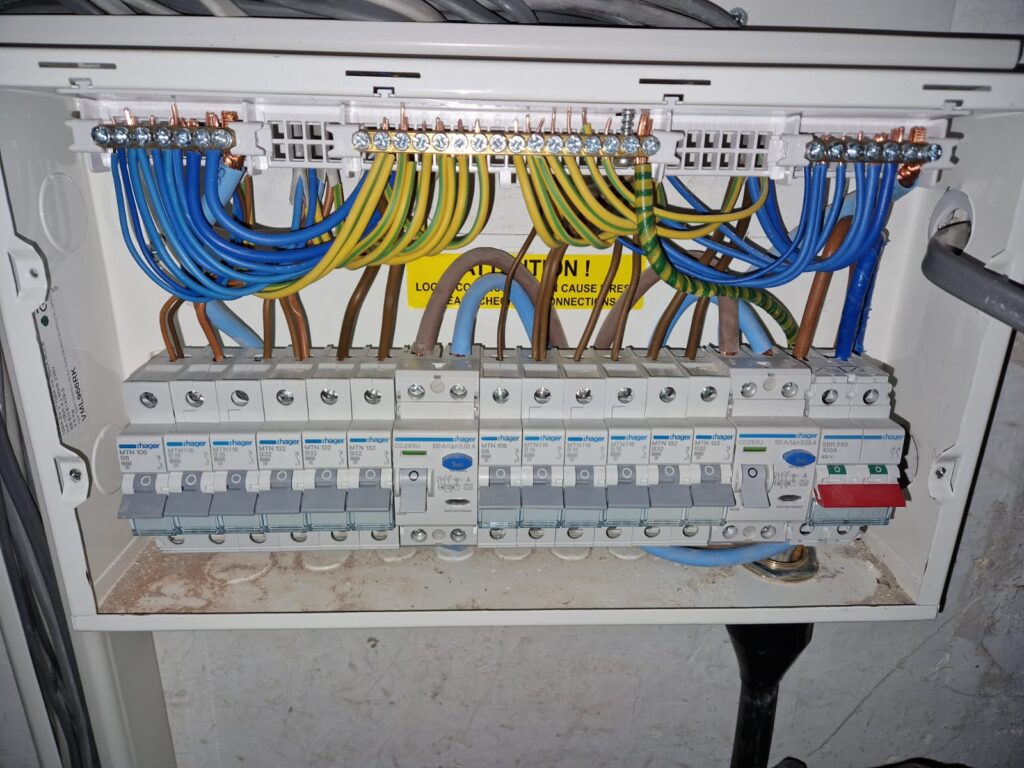
What Is the Difference Between an Old Fuse Box and a Modern Consumer Unit?
The main difference lies in the protective devices and how electrical faults are managed.
Traditional fuse boxes often rely on fuses that disconnect a circuit when excessive current flows.
Modern consumer units can include several types of protection:
MCBs (Miniature Circuit Breakers)
Protect circuits against overloads and short circuits.
RCDs (Residual Current Devices)
Provide additional protection against certain electric shock risks by detecting an imbalance between live and neutral currents.
RCBOs (Residual Current Breakers with Overcurrent Protection)
Combine residual current protection with overload and short-circuit protection for individual circuits.
SPDs (Surge Protective Devices)
Help protect electrical installations and connected equipment against transient overvoltages.
Surge protection is particularly worth considering where a property contains sensitive electronic equipment, computers or modern appliances.
The correct arrangement depends on the property’s electrical installation and the applicable requirements of BS 7671.
What Happens During a Fuse Board Upgrade?
Replacing a consumer unit involves more than disconnecting an old box and fitting a new one.
A competent electrician must assess the existing installation and ensure the replacement is suitable.
A typical process includes:
- Initial assessment: Checking the existing consumer unit, electrical supply, earthing and bonding arrangements.
- Electrical inspection and testing: Identifying defects that may need attention before or during the upgrade.
- Safe isolation: Disconnecting the electricity supply before replacement work begins.
- Consumer unit installation: Fitting suitable protective devices, circuit connections and labelling.
- Testing and certification: Verifying the completed work and issuing the appropriate electrical installation certification.
In England, replacing a consumer unit is generally notifiable under Part P of the Building Regulations.
Where applicable, the work must be notified through an appropriate route, such as a registered competent person scheme or local building control.
Working with competent NICEIC electricians can help property owners ensure the installation is properly assessed, tested and documented.
Do Landlords and Commercial Properties Need Fuse Board Upgrades?
Landlords and business owners have responsibilities concerning the safety of their electrical installations.
For private rented properties in England, electrical installations generally require inspection and testing at least every five years, or sooner where specified by the previous report.
However, this doesn’t mean every rental property must automatically have a new consumer unit.
An older fuse board should be assessed based on its condition, protective arrangements and the findings of the electrical inspection.
For landlords managing HMOs, flats and rental accommodation, Landlord Services and periodic electrical inspections can help identify necessary improvements.
Commercial properties may also require electrical upgrades as equipment, occupancy and building use change.
Electrical safety arrangements can involve several different services, including:
- Inspections & Tests and EICR – assessing fixed electrical installations
- PAT Testing – inspecting and testing electrical equipment where appropriate
- Fire Alarm Services – installation, servicing and maintenance of fire detection and warning systems
- Emergency Lighting Services – installation, testing and maintenance of emergency lighting
- Electrical Installations – installing or modifying electrical systems
Each service has a different purpose, but together they can support a property’s wider electrical safety and maintenance arrangements.
Can You Upgrade a Fuse Board Without Rewiring the House?
Yes, in many cases.
A fuse board replacement doesn’t automatically require a complete rewire.
If the existing wiring is in suitable condition and the circuits can be safely connected to the new protective devices, an upgrade may be possible without replacing all the cables.
However, older wiring can sometimes contain faults that only become apparent during inspection and testing.
For example, deteriorated insulation, inadequate earthing or unsuitable circuit arrangements may need attention before the new consumer unit can be commissioned.
Where wiring is extensively damaged or no longer suitable, a Rewire may be recommended.
The important distinction is that fuse board upgrades improve the distribution and protection of electrical circuits, while rewiring addresses the condition or suitability of the wiring itself.
Both should be considered according to the actual condition of the installation.

How Long Does a Fuse Board Upgrade Take?
For a straightforward domestic installation, replacing a consumer unit may take approximately four to eight hours.
However, this is only a general guide.
The time required depends on:
- The number of circuits
- The condition of the existing wiring
- Accessibility of the consumer unit
- Earthing and bonding arrangements
- Any faults identified during testing
- Additional remedial work required
Electricity will need to be switched off during parts of the work, so homeowners and businesses should plan accordingly.
Larger properties and commercial installations may require additional time.
Fuse Board Upgrades Across Eastbourne and East Sussex
Electrical installations vary considerably across East Sussex.
An older terraced property in central Eastbourne may still have an ageing fuse box, while a recently refurbished home in Polegate might already have a modern consumer unit.
Similarly, rental properties in Hailsham, converted flats in Seaford and commercial premises in Pevensey Bay may have different electrical requirements.
Property owners in Stones Cross, Normans Bay, Willingdon and West Ham should also consider the age, condition and suitability of their existing electrical installations.
Whether you’re arranging planned improvements or need Emergency Electrical Repairs, choosing a qualified electrician in Eastbourne can help ensure the electrical system is properly assessed.
Some electrical contractors in Eastbourne also provide services such as surge protection, outlet and switch installation, fault finding and consumer unit replacement.
For urgent electrical problems, an emergency electrician or 24 hour electrician may be needed to investigate potentially dangerous faults.
Frequently Asked Questions About Fuse Board Upgrades
How do I know if my fuse board needs upgrading?
An older fuse board, lack of RCD protection, visible damage or repeated electrical faults may indicate that an assessment is needed. A qualified electrician can inspect the installation and advise whether replacement is necessary.
Is it a legal requirement to upgrade an old fuse board?
Not simply because it’s old. The need for an upgrade depends on the installation’s condition, applicable safety requirements and any identified defects. Certain electrical works and property types are subject to additional legal obligations.
Will a new fuse board make my home safer?
A correctly installed modern consumer unit can provide improved protection against certain electrical faults. However, the existing wiring and other electrical components must also be in suitable condition.
Do I need an EICR before a fuse board upgrade?
A separate full EICR isn’t automatically required for every replacement. However, the electrician must carry out appropriate assessment, inspection and testing to establish that the existing installation is suitable for the proposed work.
Can I stay at home during a fuse board upgrade?
Usually, yes. However, the electricity supply will be interrupted during the work, and access to the consumer unit and relevant electrical circuits will be required.
Does a fuse board upgrade include surge protection?
Not necessarily. Surge protection requirements depend on the installation and applicable regulations. Your electrician can explain whether an SPD is required or recommended for your property.
Is It Time to Have Your Fuse Board Checked?
A fuse board isn’t something most property owners look at every day, but it plays an important role in electrical safety.
As electrical installations age and properties undergo improvements, it’s worth checking whether existing protective devices remain suitable.
Not every older fuse board needs replacing, and not every electrical fault requires a major upgrade.
What matters is understanding the condition of your electrical installation and making informed decisions about any necessary improvements.
For professional fuse board upgrades in Eastbourne, M and M Electrical Services Ltd provides electrical services for homeowners, landlords and businesses across Eastbourne and the surrounding areas of East Sussex.
As NICEIC-approved electrical contractors in Eastbourne, we provide consumer unit upgrades, electrical inspections, EICRs, landlord services, electrical installations, rewiring, PAT testing, fire alarm services, emergency lighting and electrical repairs.
Whether you’re planning an upgrade or concerned about the condition of your existing fuse board, contact M and M Electrical Services Ltd to discuss your property’s electrical requirements.
