
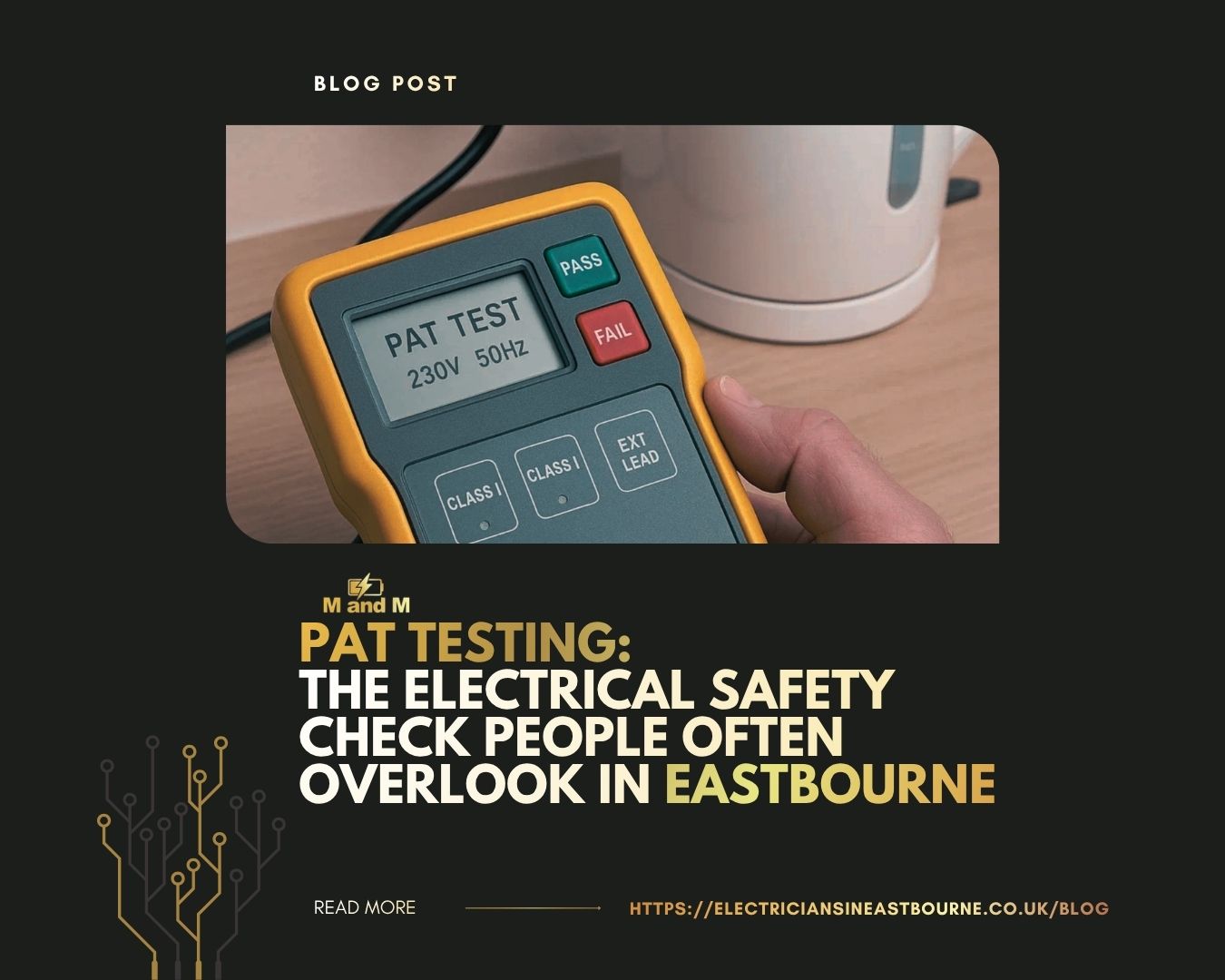
A kettle boils every morning. A laptop charger works without a problem. The office printer has been plugged into the same socket for years. PAT Testing may not be the first thing people think about when equipment appears to be working normally, but electrical safety problems are not always obvious.
When electrical equipment continues to work, it is easy to assume that it is safe. But an appliance does not necessarily have to stop working before it develops an electrical safety issue.
That is where PAT Testing can play an important role.
PAT Testing, or Portable Appliance Testing, is used to help assess the safety of electrical equipment and identify problems such as damaged cables, deteriorating insulation, incorrect plugs or other faults that may not be immediately obvious during everyday use.
For businesses, landlords, property managers and organisations across Eastbourne and East Sussex, understanding PAT Testing is an important part of managing electrical safety responsibly.
What Is PAT Testing?
PAT Testing refers to the inspection and, where appropriate, electrical testing of appliances and equipment to determine whether they are safe for continued use.
Despite its name, PAT Testing is not simply a case of connecting every appliance to a testing machine.
A competent inspection may involve:
- Checking plugs and cables for visible damage
- Looking for cracked or damaged appliance casings
- Checking for signs of overheating
- Inspecting connections and fuse ratings
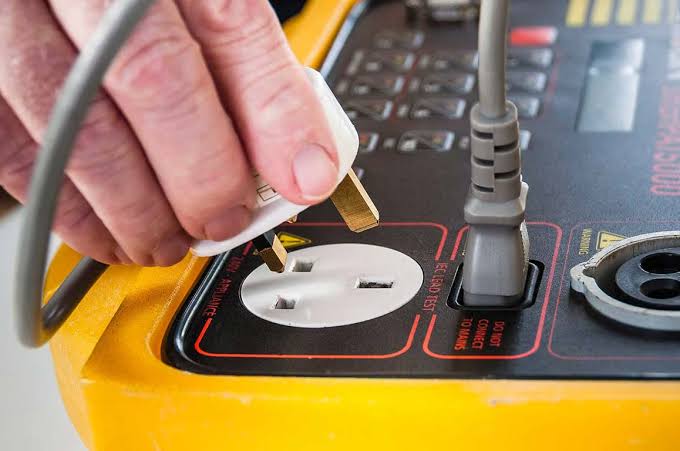
- Earth continuity testing where applicable
- Insulation resistance testing where applicable
- Recording the condition and test results of equipment
The tests required can vary depending on the appliance and its electrical classification.
Importantly, visual inspection is a major part of PAT Testing. Something as simple as a damaged cable, loose plug or scorch mark can reveal a problem before electrical testing even begins.
An Appliance Can Work and Still Have a Problem
One of the reasons appliance faults can go unnoticed is simple: the equipment still works.
Consider an extension lead in a busy office. It may be moved, stepped on and pulled from sockets repeatedly. A vacuum cleaner in a rental property may have its cable twisted and stretched hundreds of times. A kettle in a staff kitchen may be plugged in and unplugged several times every day.
None of these appliances necessarily stops working immediately when deterioration begins.
Instead, damage can develop gradually.
PAT Testing can help uncover problems including:
- Split or frayed cables
- Damaged plugs
- Loose connections
- Exposed conductors
- Deteriorated insulation
- Signs of overheating
- Incorrect fuse ratings
- Poor previous repairs
Finding these problems early allows unsafe equipment to be removed, repaired or replaced before the fault develops further.
Is PAT Testing a Legal Requirement?
This is where PAT Testing is often misunderstood.
UK legislation does not generally require every electrical appliance to receive a PAT test once every year.
Instead, employers and those responsible for workplaces have duties to ensure electrical equipment is maintained so that it does not present a danger. Relevant legislation can include the Electricity at Work Regulations 1989 and the Health and Safety at Work etc. Act 1974. The Provision and Use of Work Equipment Regulations 1998 (PUWER) may also apply to equipment used at work.
PAT Testing is therefore commonly used as part of a wider inspection and maintenance programme.
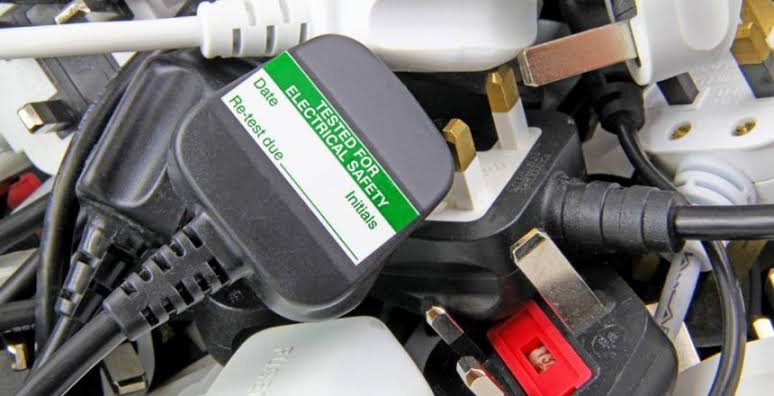
The important principle is not simply having a sticker on an appliance. It is being able to manage electrical equipment appropriately according to the risk involved.
Who Can Benefit From PAT Testing?
The need for PAT Testing varies considerably depending on where equipment is used and how it is treated.
Businesses and Offices
Modern workplaces can contain dozens or even hundreds of electrical items, from computers and monitors to printers, kettles, extension leads and portable heaters.
Equipment that is regularly moved or used by several people may be more likely to suffer accidental damage.
Regular inspection and PAT Testing can help businesses identify unsafe equipment and maintain useful records of their electrical safety programme.
Landlords and Rental Properties
Where a landlord supplies electrical appliances with a property, keeping those appliances safe should form part of responsible property management.
Items may include:
- Fridges and freezers
- Washing machines
- Microwaves
- Kettles
- Vacuum cleaners
- Portable heaters
PAT Testing can complement wider Landlord Services, particularly alongside inspections of the property’s fixed electrical installation.
Hotels, Guest Houses and Hospitality
Guest accommodation can contain a surprisingly large number of appliances.
Lamps, kettles, televisions, hairdryers, extension leads, kitchen equipment and cleaning equipment may all be used frequently and by different people.
Because of that repeated use, routine inspection can be particularly valuable in hospitality environments.
Schools, Shops and Public Buildings
Schools, shops, care settings and other public or shared environments may contain large quantities of electrical equipment.
Some items are moved frequently or used by many different people, increasing the possibility of wear or accidental damage.
A planned inspection and testing programme can help those responsible for these properties identify problems before equipment becomes unsafe.
How Often Should PAT Testing Be Done?
There is no single PAT Testing interval that is appropriate for every appliance.
A computer sitting undisturbed on an office desk does not face the same conditions as a power tool regularly transported between sites.
The appropriate frequency should therefore take account of factors such as:
- Type of equipment
- Electrical classification
- How frequently it is used
- Whether it is regularly moved
- The environment in which it is used
- Who uses the equipment
- Previous inspection or test results
- Manufacturer guidance where relevant
This risk-based approach is more useful than assuming that every appliance automatically requires the same annual testing schedule.
Equipment in harsher environments or subjected to frequent movement may need checking more often than equipment used in a controlled, low-risk setting.
What Happens After PAT Testing?
Good PAT Testing is about more than putting a pass label on an appliance.
Proper records can help a business or property manager understand what equipment was inspected, where it was located and whether any faults were found.
Depending on the testing programme, records may include appliance identification, location, inspection results, electrical test results, failures and recommendations.
If an appliance fails, the important part is what happens next. Depending on the fault, equipment may need to be repaired by a competent person, removed from use or replaced.
Keeping clear records can also make future inspections easier by providing a history of the equipment and any previous issues.
PAT Testing Is Only One Part of Electrical Safety
Portable appliances are only one part of a property’s electrical system.
While PAT Testing focuses on electrical equipment and appliances, an EICR assesses the condition of the fixed electrical installation, including circuits, wiring and associated equipment.
Depending on the property, a broader electrical safety programme might also involve:
- Inspections & Tests
- EICR
- Electrical Installations
- Rewire work for ageing or unsuitable electrical systems
- Fire Alarm Service
- Fire Alarm Maintenance
- Emergency Lighting
- Landlord Services
For example, an appliance may pass its PAT test while the fixed electrical installation supplying it has a separate problem. Equally, a satisfactory EICR does not mean every portable appliance in the building is automatically safe.
The two types of inspection address different areas of electrical safety.
PAT Testing and Fire Safety
PAT Testing is commonly associated with protection against electric shock, but damaged electrical equipment can also present a fire risk.
Loose connections, damaged flexes, deteriorated insulation and overheating equipment should not be ignored simply because an appliance continues to operate.
This is particularly relevant for businesses, landlords and properties with large amounts of electrical equipment.
PAT Testing can therefore sit alongside Fire Alarm Service, Fire Alarm Maintenance and Emergency Lighting as part of a broader approach to keeping a property safe.
Fire alarm and emergency lighting systems help protect occupants when an emergency occurs; good electrical maintenance can help reduce avoidable risks before they reach that stage.
Don’t Wait for an Appliance to Stop Working
Electrical equipment rarely comes with an obvious warning that says, “I am becoming unsafe.”
Often, deterioration happens gradually.
A cable gets damaged. A plug begins overheating. A connection loosens. An appliance is dropped and appears fine from the outside. Because it continues working, nobody thinks twice about using it.
That is what makes regular inspection valuable.
PAT Testing is not about testing appliances simply for the sake of having a label. It is about finding problems that everyday use can easily hide.
For anyone responsible for employees, tenants, guests, customers or members of the public, that can make PAT Testing a worthwhile part of routine electrical safety management.
PAT Testing in Eastbourne and East Sussex
For properties in Eastbourne, Stones Cross, Pevensey Bay, Polegate, Normans Bay, Seaford, Hailsham, Willingdon and Westham, M and M Electrical Services Ltd provides professional PAT Testing for businesses, landlords and other properties requiring electrical appliance inspection and testing.
As experienced electrical contractors in Eastbourne and NICEIC electricians, M and M also provides Landlord Services, Inspections & Tests, EICR, Fire Alarm Service, Fire Alarm Maintenance, Emergency Lighting, Electrical Installations and Rewire services across Eastbourne and surrounding areas of East Sussex.
If you are unsure whether your appliances should be inspected or how frequently testing may be appropriate, an experienced electrician in Eastbourne can assess the type of equipment, how it is being used and the environment it operates in before recommending a suitable approach.
Regular PAT Testing is ultimately about something straightforward: knowing that the electrical equipment people rely on every day has not developed a problem that nobody has noticed yet.