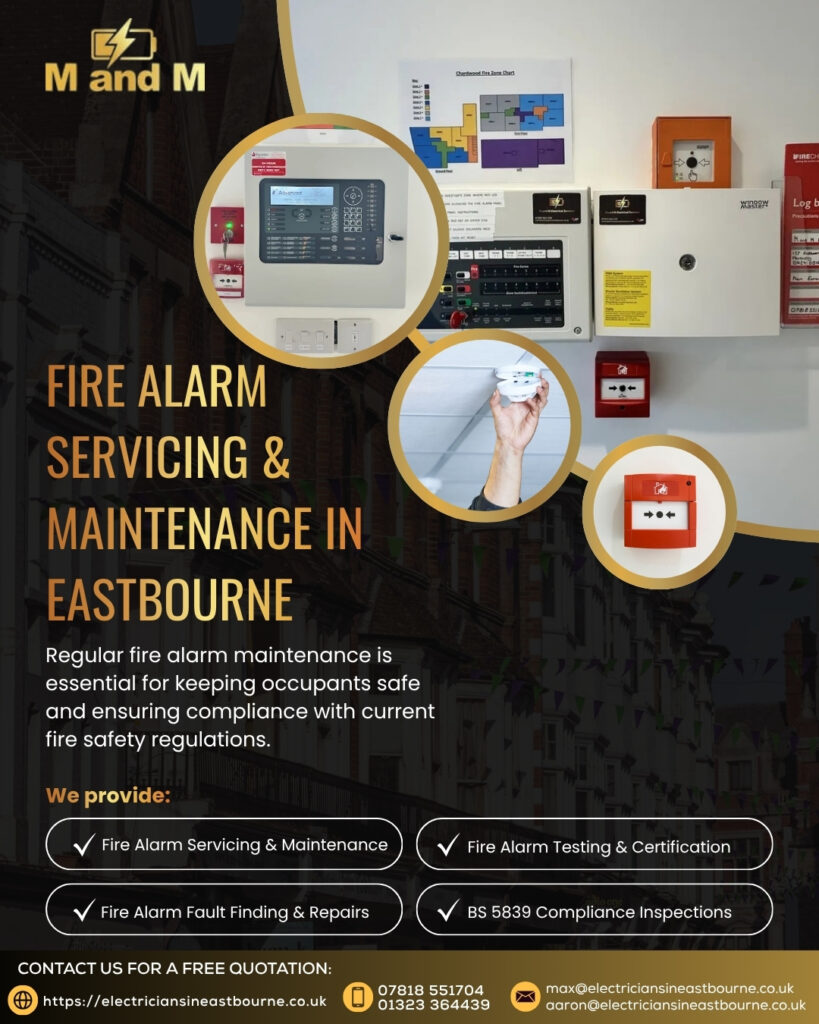

Choosing a fire alarm engineer in Eastbourne is about more than finding someone who can test a detector or reset a fire alarm panel. Fire alarm systems are life-safety systems, so the person working on them should have the appropriate knowledge, training and experience to inspect, maintain, diagnose and install them correctly.
For landlords, businesses, property managers and HMO owners, understanding what a qualified fire alarm engineer actually does can make it easier to choose the right professional and keep a fire alarm system reliable over the long term.
So, what should you look for?
What Does a Fire Alarm Engineer Do?
A fire alarm engineer specialises in the installation, testing, servicing, maintenance and repair of fire detection and alarm systems.
Depending on the property and system, their work may involve:
- Fire alarm installation and commissioning
- Fire alarm routine maintenance
- Detector and manual call point testing
- Control panel inspections
- Battery and power supply checks
- Fire alarm fault repairs
- System upgrades and alterations
- Maintenance records and documentation
- Advice on ongoing testing and servicing
This requires more specialist knowledge than simply knowing how electrical wiring works. An engineer must understand how the complete fire alarm system should respond during an emergency and how its different components work together.
What Qualifications Should a Fire Alarm Engineer Have?
Competence is one of the most important considerations when choosing a fire alarm engineer.
An engineer working with fire detection and alarm systems should have suitable training, technical knowledge and practical experience for the type of system being maintained or installed.
They should also understand the relevant British Standards. BS 5839-1 provides recommendations for fire detection and fire alarm systems in non-domestic premises, while BS 5839-6 covers fire detection and fire alarm systems in domestic premises.
Depending on the building and work required, an experienced engineer may also need knowledge of system categories, detector positioning, alarm zones, control equipment, fault diagnosis and ongoing maintenance requirements.
For property owners already searching for an electrician in Eastbourne or a NICEIC electrician, it is worth remembering that fire alarm work can require additional specialist competence and experience.
Why Experience With Different Properties Matters
A small domestic property does not necessarily have the same fire alarm requirements as an HMO, office, shop or larger commercial building.
An experienced fire alarm engineer in Eastbourne should therefore consider the building itself rather than treating every system in exactly the same way.
This is particularly relevant when dealing with:
Fire Alarm Systems for Businesses
Commercial premises can contain multiple detection zones, manual call points, sounders, control panels and other interconnected components.
A fire alarm engineer needs to understand the installed system and how it relates to the layout and use of the building.
Fire Alarm Systems for HMOs
HMOs can have different fire safety requirements depending on factors such as their size, layout, occupancy and applicable fire risk assessment or local requirements.
This makes correct system design, installation and ongoing maintenance particularly important.
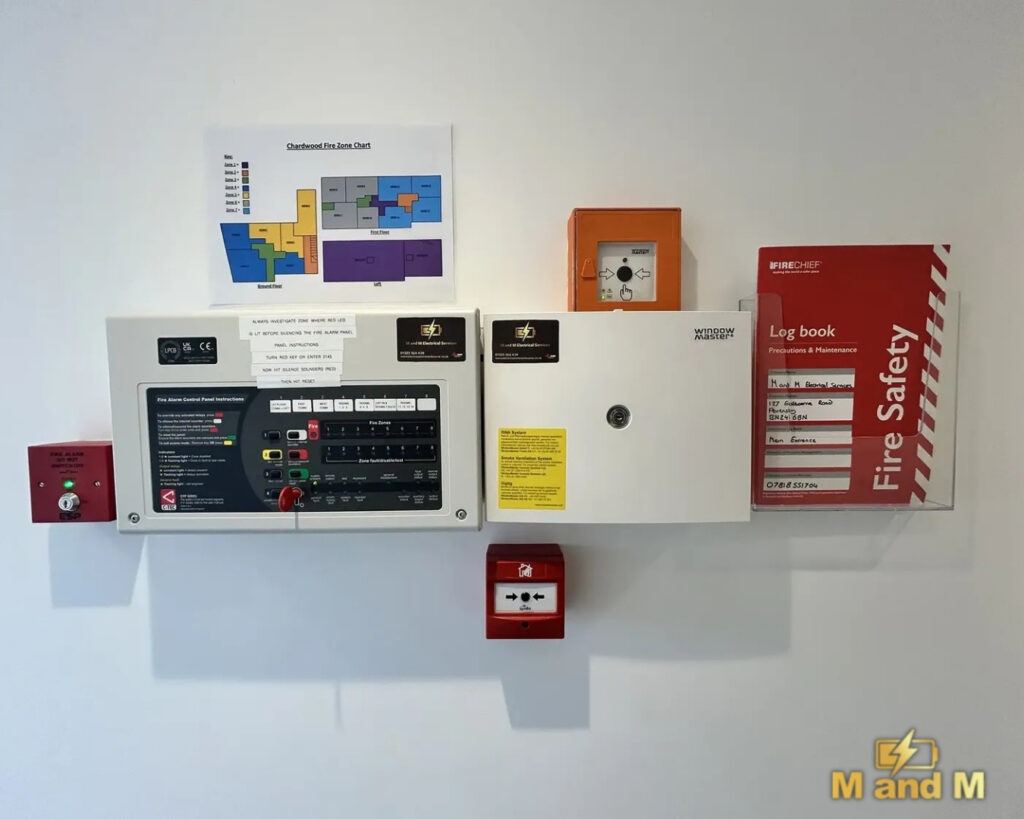
Why Fire Alarm Design and Installation Experience Matters
A fire alarm engineer does not only maintain existing systems. Specialist knowledge is equally important when a new fire alarm system is being designed, installed or upgraded.
Choosing detectors and fitting them around a property is only one part of the process. The system needs to be appropriate for the building, its layout, how it is occupied and the level of protection required.
A professional fire alarm installation may involve considering:
- The appropriate fire alarm category or grade
- Smoke and heat detector locations
- Manual call point positioning
- Alarm sounder coverage
- Fire alarm zones
- Control panel location
- Power supplies and backup batteries
- Cable routes and system wiring
- Accessibility requirements
- Future servicing and testing requirements
This is particularly important for fire alarm systems for businesses and fire alarm systems for HMOs, where the layout and use of a building can make the requirements more complex.
An experienced fire alarm engineer in Eastbourne should be able to look beyond the individual components and consider how the complete system needs to operate.
Good system design can also make future fire alarm routine maintenance and fault finding easier. Clearly arranged equipment, suitable detector positioning and properly documented systems can help engineers identify problems more efficiently during future servicing visits.
Where an existing building is being renovated, converted or extended, the fire alarm system may also need to be reviewed to determine whether the existing design remains appropriate for the new layout.
This is why involving a competent fire alarm professional early in a project can be valuable rather than treating the alarm system as an afterthought.
What Happens During Fire Alarm Routine Maintenance?
Professional maintenance involves considerably more than checking whether an alarm makes a noise.
Depending on the system and maintenance visit, a fire alarm engineer may inspect or test:
- Smoke and heat detectors
- Manual call points
- Alarm sounders
- Fire alarm control panels
- Backup batteries
- Power supplies
- Fault indicators
- System connections
- Relevant records and logbooks
Any faults discovered can then be investigated so appropriate fire alarm fault repairs can be recommended or completed.
Routine maintenance can help identify deterioration, damaged equipment and developing faults before they affect the reliability of the system.
Weekly Testing vs Professional Fire Alarm Servicing
Weekly testing and professional servicing serve different purposes.
Routine weekly testing can help confirm that the system responds when activated. In many workplaces, this is managed by the responsible person or another nominated individual and recorded in the fire alarm logbook.
Some property managers may instead arrange a fire alarm weekly testing service where ongoing assistance is required.
Professional servicing goes further. A competent engineer examines the condition and operation of the system in greater detail and can identify issues that may not become apparent during a basic weekly test.
A fire alarm annual inspection may also form part of a property’s maintenance arrangements, although the appropriate inspection and servicing frequency depends on the type of premises, system and applicable recommendations. For systems covered by BS 5839-1, inspection and servicing intervals should be determined through the relevant risk assessment and should not normally exceed six months.

Why Fire Alarm Faults Should Not Be Ignored
An intermittent warning light, repeated false alarm or control-panel fault may seem minor, particularly if the system still appears to operate.
However, fire alarm faults can indicate problems with detectors, batteries, circuits, wiring or other components.
Professional fire alarm fault repairs allow the cause to be investigated rather than simply resetting the panel and hoping the warning disappears.
This is particularly important because a fire alarm system needs to be dependable on the occasion when it is genuinely required.
When Should You Call a Fire Alarm Engineer?
Not every fire alarm problem results in the alarm sounding continuously. Some of the earliest signs of trouble can be much less obvious.
A fire alarm engineer should be contacted if a system begins displaying faults, behaving differently from normal or repeatedly experiencing unexplained problems.
Warning signs can include:
- A fault light appearing on the control panel
- Repeated false alarms
- Intermittent beeping or warning signals
- Detectors failing during testing
- Damaged detectors or manual call points
- Battery or power supply warnings
- Zones showing unexplained faults
- Sounders failing to operate correctly
- Previous faults repeatedly returning after a reset
- Missing or incomplete maintenance records
Simply resetting a control panel does not necessarily resolve the underlying cause of a fault.
For example, repeated warnings could be linked to a deteriorating battery, damaged detector, wiring problem, contaminated device or another system component requiring investigation. Professional fire alarm fault repairs are therefore about identifying the cause rather than repeatedly clearing the warning.
The same principle applies when a system appears to be working normally. A lack of visible faults does not mean professional maintenance is unnecessary.
Regular fire alarm routine maintenance, appropriate periodic inspection and ongoing testing help identify problems that may otherwise remain unnoticed. Businesses, landlords and responsible persons should also keep relevant testing and servicing records so that the maintenance history of the system can be followed over time.
If a property has recently undergone an extension, refurbishment, change of use or significant internal alteration, it may also be sensible to have the fire alarm arrangements reviewed. Changes to room layouts, escape routes or occupancy can affect whether an existing system remains appropriate.
A qualified fire alarm engineer in Eastbourne can assess the system, investigate faults and advise whether servicing, repair, alteration or further assessment is required.
Choosing a Fire Alarm Engineer in Eastbourne
Before appointing a company, consider asking about its training, experience, applicable standards and the types of systems it regularly works with.
A suitable provider should be able to explain what work is required, identify faults clearly and provide appropriate records following servicing or installation.
It can also be useful to choose an electrical contractor in Eastbourne that understands the wider electrical systems within a property. Fire alarms, emergency lighting and fixed electrical installations are separate safety considerations, but they often form part of the same overall approach to maintaining a safe building.
FAQs About Fire Alarm Engineers in Eastbourne
What does a fire alarm engineer do?
A fire alarm engineer installs, tests, services, maintains and diagnoses faults in fire detection and alarm systems. Their work can include detectors, manual call points, control panels, sounders, batteries, wiring and other system components.
Can an electrician service a fire alarm?
An electrician may be able to work on fire alarm systems if they have the appropriate fire alarm training, knowledge and experience. Fire alarm work requires specialist competence in addition to general electrical knowledge.
How often should a fire alarm system be professionally serviced?
The correct frequency depends on the type of property, system and applicable standard. For non-domestic systems covered by BS 5839-1, the interval between professional inspection and servicing visits should be based on a risk assessment and should not normally exceed six months.
Do HMOs need specialist fire alarm systems?
The appropriate fire alarm systems for HMOs depend on the building, occupancy, layout, fire risk assessment and applicable requirements. A competent professional can help assess the system required for a particular property.
Qualified Fire Alarm Engineer in Eastbourne
A fire alarm system should provide dependable warning when it matters most. That makes choosing a suitably trained and experienced fire alarm engineer in Eastbourne an important part of maintaining the system.
M and M Electrical Services Ltd is fully qualified and experienced in the design and installation of fire alarm systems. Our fire alarm installation work is carried out with consideration of applicable requirements including BS 5839-1 and BS 5839-6, LACORS guidance and relevant accessibility requirements where necessary. Our team is also qualified to British Fire Protection Systems Association standards.
As a NICEIC electrician and electrical contractor in Eastbourne, M and M Electrical Services supports homes, landlords, HMOs and businesses with Fire Alarm Servicing, Fire Alarm Maintenance, Fire Alarm Installation, Landlord Services, Inspections & Tests, PAT Testing, Emergency Lighting Servicing, Electrical Installations and Rewire projects across Eastbourne and the surrounding areas.
Whether you need routine maintenance, investigation of a fire alarm fault or advice about a new system, our team can help assess what is required for your property.