

A good lighting installation should do more than simply make a room brighter. The right lighting can change how a space feels, make everyday tasks easier, improve safety and even help reduce unnecessary energy use.
Whether you are renovating a home, upgrading a kitchen, fitting out commercial premises or replacing outdated lighting, it is worth thinking about how the space will actually be used before choosing fittings.
For homeowners, landlords and businesses in Eastbourne and East Sussex, professional lighting design and installation can bring together practicality, efficiency and appearance rather than treating lighting as an afterthought.
Why Lighting Installation Starts Before the Fittings Go In
One of the easiest mistakes to make is deciding where lights should go based purely on symmetry.
A row of perfectly spaced downlights might look neat on a plan, but does it put enough light over the kitchen worktop? Will a desk be left in shadow? Is there comfortable lighting for the evening as well as brighter lighting when the room is being cleaned or used for work?
Professional lighting installation considers how people move through and use a property.
Depending on the room, this can mean combining:
- General lighting for overall illumination
- Task lighting for kitchens, desks and work areas
- Feature or accent lighting
- Outdoor and security lighting
- Energy-efficient LED lighting
- Appropriate switching and lighting controls
Thinking about these elements together can create a much more practical electrical installation.
Lighting Design and Installation for Homes
Different rooms need different approaches.
A living room may benefit from several lighting options rather than one central fitting. Kitchens usually need brighter task lighting around preparation and cooking areas, while bedrooms often work better with softer general lighting alongside bedside or feature lighting.
Hallways, stairs and entrances also need careful consideration because good visibility contributes to everyday safety.
This is where an experienced electrician in Eastbourne can help translate the way a homeowner wants to use a room into a suitable lighting design and electrical layout.
When lighting forms part of a larger renovation or Rewire, planning it early also allows cables, switches and circuits to be positioned before decorating is completed.
Kitchen & Bathroom Electrics Need Extra Thought
Kitchens and bathrooms are two areas where electrical design and practicality have to work closely together.
A kitchen electrical installation may combine ceiling lights, under-cabinet lighting, sockets and connections for appliances and equipment. Planning these together helps prevent situations where lighting, sockets and appliances compete for inconvenient positions.
Bathrooms require additional consideration because electricity is being used close to water. Suitable equipment must be selected and installed according to the requirements that apply to the location.
Qualified NICEIC electricians can advise on appropriate lighting, switching and other Kitchen & Bathroom Electrics as part of a wider electrical installation.
Energy-Efficient Lighting Solutions
Replacing older lighting with modern LED alternatives can be one of the simpler ways to improve an electrical system.
LED lighting generally uses less electricity and offers a longer service life than many traditional lamps, potentially reducing both energy use and the frequency of replacements.
However, energy efficiency is not simply about fitting LEDs everywhere.
A well-designed lighting installation can also consider whether a space is being illuminated unnecessarily. Appropriate controls, sensors, timers or separate lighting zones may help reduce the amount of time lights remain switched on when they are not required.
For businesses and larger properties across Eastbourne and East Sussex, these small design decisions can become particularly useful when repeated across numerous rooms or communal areas.
Lighting Controls, Dimmers and Sensors
The way lighting is controlled can be just as important as the fittings themselves.
A well-planned lighting installation can include different controls depending on how each area is used. Instead of having every light operate from a single switch, separate lighting zones can give occupants more flexibility and help avoid illuminating areas unnecessarily.
Depending on the property and the type of lighting installed, options may include:
- Dimmer switches for adjustable light levels
- Motion or occupancy sensors
- Timers for external or communal lighting
- Separate switching for different lighting zones
- Automatic controls for areas that are not continuously occupied
For example, a kitchen might have separate controls for ceiling lighting, under-cabinet lighting and feature lighting. In a commercial property, sensors may be useful in corridors, storage areas, toilets or other spaces where lights do not need to remain on continuously.
Planning controls at the same time as the lighting installation can create a system that is easier to use while also helping manage unnecessary energy consumption.
Outdoor and Security Lighting Installation
Lighting design does not stop at the front door.
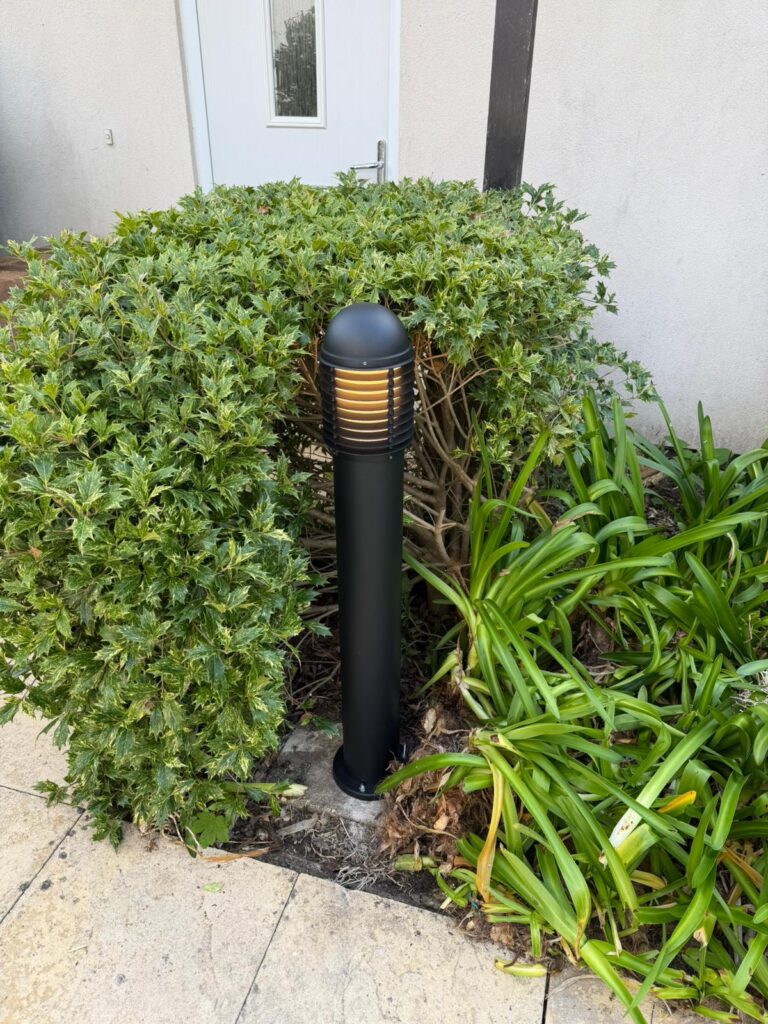
Outdoor lighting can improve visibility around entrances, pathways, driveways, gardens, car parks and other external areas. For homes, it can make access easier after dark, while businesses and managed properties may use external lighting to improve visibility around frequently used entrances and communal spaces.
An outdoor lighting installation might include:
- Entrance and doorway lighting
- Pathway and driveway lighting
- Garden and feature lighting
- Security lighting
- Motion-activated lighting
- Lighting for car parks and external communal areas
External electrical equipment is exposed to very different conditions from indoor fittings. Rain, moisture, temperature changes and the location of cables and connections all need to be considered when selecting and installing suitable equipment.
The positioning of security lighting also matters. Simply choosing the brightest fitting is not always the best approach. Careful placement can provide useful coverage without unnecessarily illuminating neighbouring properties or creating uncomfortable glare.
For larger properties and commercial premises, external lighting can also be considered alongside other Electrical Installations, security requirements and Emergency Lighting where applicable.
Lighting Installation for Commercial Properties
Commercial lighting often has different priorities from domestic lighting.
Offices may require comfortable and consistent illumination for working areas. Retail environments may use lighting to make products easier to see, while communal areas, corridors and stairwells need appropriate illumination for safe movement.
Commercial premises may also require other electrical safety systems alongside normal lighting.
Depending on the property, work carried out by electrical contractors in Eastbourne may include Electrical Installations, Fire Alarm Installation, Fire Alarm Maintenance, Emergency Lighting Installation and Emergency Lighting Maintenance.
Planning these systems together can help create a more coordinated electrical installation rather than treating each element as an isolated job.
Appliance and Equipment Installation
Lighting is often only one part of an electrical upgrade.
New kitchens, offices, commercial units and refurbished properties may also require dedicated connections for appliances or electrical equipment. Before equipment is installed, consideration should be given to the existing circuits, electrical load and suitability of the supply.
Professional Appliance and Equipment Installation helps ensure equipment is connected correctly and that the wider electrical system is suitable for the intended use.
For workplaces and rental properties, ongoing electrical safety may also involve PAT Testing, depending on the equipment and circumstances.
What About Existing Electrical Installations?
Installing new lighting does not automatically mean the rest of an electrical system needs replacing.
However, alterations can sometimes reveal older wiring, inadequate circuits or other issues that deserve further investigation.
An EICR (Electrical Installation Condition Report) and other Inspections & Tests can provide information about the condition of an existing installation. For rental properties, appropriate electrical checks may also form part of wider Landlord Services.
If an older installation is no longer suitable for the property’s requirements, an electrician can advise whether targeted improvements or a more extensive Rewire should be considered.
Lighting Should Work When Normal Power Doesn’t
Normal lighting and emergency lighting perform very different jobs.
Emergency lighting is designed to operate when the normal lighting supply fails, helping illuminate escape routes and exits where required. It is particularly relevant to many commercial properties, HMOs and communal areas.
Where applicable, Emergency Lighting Installation should therefore be planned correctly and followed by appropriate Emergency Lighting Maintenance and testing.
The same principle applies to Fire Alarm Installation and Fire Alarm Maintenance: installing a safety system is only the beginning. Ongoing inspection, testing and maintenance help ensure it remains ready to perform its intended function.
FAQs About Lighting Installation in Eastbourne
What does a lighting installation include?
A lighting installation can include new light fittings, lighting circuits, switches, controls, LED upgrades, task lighting, feature lighting and external lighting. The exact work depends on the property and how each area will be used.
Can an electrician help design the lighting layout?
Yes. Lighting design and installation can be planned together so that fitting positions, switching arrangements, brightness and intended use are considered before installation begins.
Can existing lights be changed to LED lighting?
In many properties, older lighting can be upgraded to energy-efficient LED alternatives. An electrician can assess the existing installation and advise on suitable options.
Do I need a rewire to install new lighting?
Not necessarily. New lighting can often be installed without a complete rewire. However, the condition and suitability of the existing wiring and circuits should be considered before alterations are made.
Can lighting be installed as part of a kitchen or bathroom renovation?
Yes. Planning Kitchen & Bathroom Electrics alongside lighting, sockets, appliances and other electrical requirements can help create a more practical finished installation.
Do commercial properties need emergency lighting?
Emergency lighting requirements depend on the building, its use and the relevant fire safety arrangements. Where emergency lighting is required, it should be appropriately designed, installed, tested and maintained.
Planning a Lighting Installation in Eastbourne?
Good lighting is rarely about installing the greatest number of fittings. It is about putting the right type of light in the right place and making sure the electrical installation behind it is safe, practical and suitable for the property.
M and M Electrical Services Ltd provides lighting installation in Eastbourne and across East Sussex, including Stones Cross, Pevensey Bay, Polegate, Normans Bay, Seaford, Hailsham, Willingdon and Westham, alongside wider Electrical Installations, Kitchen & Bathroom Electrics, Appliance and Equipment Installation, Rewire projects, EICRs, Inspections & Tests, PAT Testing and Landlord Services.
As experienced NICEIC electricians and electrical contractors in Eastbourne, M and M Electrical Services also provides Fire Alarm Installation and Maintenance, Emergency Lighting Installation and Maintenance, and electrical services for domestic and commercial properties.
If you are planning new lighting, renovating a property or considering a wider electrical upgrade, M and M Electrical Services can assess the project and help plan an installation around the way the property actually needs to work.